Welcome to Tangshan Baojie Abrasive Resistant Materials Co.,Ltd.


What is casting steel ball? Materials, process and applications explained
Nov 06,2026
Author: Baojie
Article overview
This guide explains what a casting steel ball is, how it is made, which chrome grade suits which application, and how Indian cement and mining procurement teams can compare total cost of ownership against forged alternatives — with supplier verification checklist included.
Table of contents
- 1. What is a casting steel ball?
- 2. Chemical composition and hardness grades
- 3. Manufacturing process: step by step
- 4. Casting steel ball vs forged steel ball: cost and wear comparison
- 5. How to select the right casting steel ball for your application
- 6. Quality verification: what to check before buying
- 7. Casting steel ball supply in India: capacity, standards and logistics
- 8. FAQ
What is a casting steel ball?
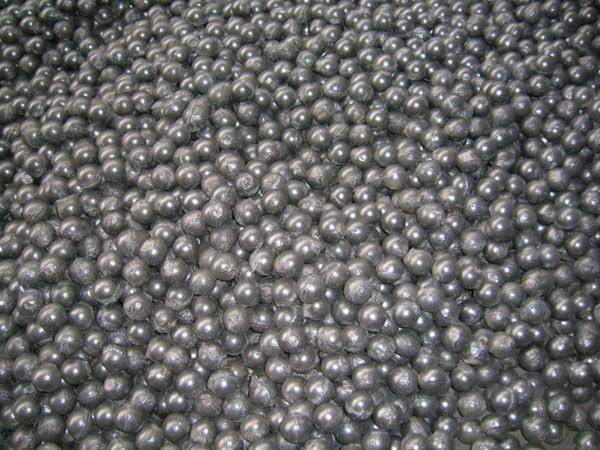
A casting steel ball is a spherical grinding media produced by pouring molten alloy steel or high-chrome iron into a mould, then hardening through quench-and-temper heat treatment to achieve controlled hardness and wear resistance. These balls are charged into ball mills, where repeated impact and attrition break down cement clinker, iron ore, copper concentrates, and other hard materials into fine powder.
Unlike a forged steel ball — which is shaped by mechanical hammering under high pressure — the casting route allows manufacturers to achieve very high chromium content (up to 26%), a level that is practically impossible through forging. That chromium concentration is precisely why high chrome casting steel balls dominate the Indian cement grinding sector. Why do so many procurement managers still treat cast and forged balls as interchangeable? The answer, as this guide will show, often comes down to incomplete cost data.
Core function in a ball mill
Inside a rotating mill drum, casting steel balls perform two functions simultaneously: impact (dropping from height to fracture coarse particles) and abrasion (rolling against each other and the liner to grind fines). According to industry consensus, grinding media accounts for 40–50% of total mill operating costs in a typical Indian cement plant, making ball selection a direct lever on profitability. Based on actual plant audits, switching from a low-specification cast ball to a verified high-chrome grade has reduced per-tonne media consumption by 15–22% in finish-mill applications.
Key product categories
The industrial steel ball market broadly splits into: high chrome steel ball (Cr ≥10%), medium-chrome alloy ball (Cr 3–8%), low-chrome alloy ball (Cr 1–3%), and alloy white iron ball. Each category targets specific mill types and ore hardness ranges. Carbon steel balls and steel shot are used in lighter-duty or surface-treatment applications. Wear resistant balls made from austenitic or martensitic alloys are positioned for highly abrasive metallic ore grinding.
Chemical composition and hardness grades
Composition is the single biggest differentiator between casting steel ball grades. Getting this wrong is the most common — and most expensive — mistake Indian buyers make. The table below maps chrome content to typical hardness ranges, microstructure, and primary application, drawing on 2026 industry data and verified mill-audit reports.
| Grade | Cr content (%) | C content (%) | Hardness (HRC) | Microstructure | Typical application |
|---|---|---|---|---|---|
| Low chrome | 1–3 | 2.0–3.2 | 45–52 | Pearlite + carbide | Coal mills, raw mills (low abrasion) |
| Medium chrome | 5–8 | 2.0–3.0 | 52–58 | Martensite + carbide | Limestone grinding, general mining |
| High chrome (standard) | 10–14 | 1.8–2.8 | 58–63 | Martensite + M7C3 carbide | Cement finish mill, iron ore |
| High chrome (premium) | 18–26 | 1.5–2.5 | 60–66 | Martensite + dense M7C3 | Hard rock mining, copper, gold |
| Carbon steel (cast) | <1 | 0.6–1.2 | 40–48 | Bainite / pearlite | Light grinding, ball mill media (budget) |
Why steel ball hardness alone does not tell the whole story
A persistent industry misconception holds that higher HRC always means better performance. In practice, excessively hard balls — particularly those above HRC 65 without adequate retained-austenite control — fracture under high-impact conditions, producing fines that contaminate the product and accelerate liner wear. The correct specification balances hardness and fracture toughness: an impact value (Charpy) of ≥3.5 J/cm² is a widely accepted minimum for industrial steel ball applications in mills with ball diameter above 80 mm.
Role of alloying elements beyond chromium
Manganese (0.5–1.2%) improves hardenability; molybdenum (0.3–0.8%) refines carbide distribution and boosts temper resistance; copper additions in some alloy steel ball grades provide mild corrosion resistance in wet-grinding circuits. Silicon controls fluidity during casting and affects microporosity. A reputable casting steel ball manufacturer India will provide a full spectrometric analysis report — not just a single hardness figure — for each heat batch.
Manufacturing process: step by step
The production of a casting steel ball involves several interdependent stages. Skipping or shortcutting any one of them is the root cause of the premature breakage and irregular wear that plague low-cost imports.
- Charge preparation: Scrap steel, pig iron, and ferro-chrome are proportioned to target chemistry. Induction or electric-arc furnaces are used; EAF is preferred for high-chrome grades due to better temperature and composition control.
- Melting and refining: The melt is held at 1,480–1,550 °C. Slag is removed, and a final spectrometric check confirms Cr, C, Si, Mn and trace elements before tapping.
- Mould casting: Molten alloy is poured into sand, metal, or permanent moulds (depending on ball size). Permanent metal moulds improve surface finish and dimensional consistency for diameters below Φ80 mm.
- Shake-out and cleaning: Solidified balls are shaken free of sand, gates are removed, and surface flash is ground off. Visual and dimensional inspection occurs at this stage.
- Heat treatment — austenitising: Balls are heated uniformly to 950–1,050 °C (depending on chrome grade) to dissolve carbides into austenite. Uniform soaking time is critical; under-soaked balls show soft spots.
- Quenching: Air quench for high-chrome grades is standard; oil or water quench is used for lower-chrome or carbon steel balls. This converts austenite to martensite, driving up hardness.
- Tempering: Balls are tempered at 200–400 °C to relieve quench stresses and reduce retained austenite to an acceptable level, restoring toughness without significant hardness loss.
- Final inspection and packaging: Hardness testing (Rockwell), impact testing, dimensional gauging, and surface inspection. Approved balls are packed in 1-tonne bulk bags or steel drums for dispatch.
"The quench-and-temper cycle is where most cost-cutting manufacturers compromise — a 15-minute deviation in austenitising time can reduce service life by over 30%." — Consensus finding across multiple plant-level metallurgical audits, 2026 industry review.
Sand casting vs permanent mould casting
Sand casting accommodates large batch sizes and wide diameter ranges (Φ20 mm to Φ150 mm) at lower tooling cost but yields slightly rougher surfaces and wider dimensional tolerance (±1.5 mm). Permanent metal moulds produce tighter tolerances (±0.5 mm) and better surface quality, reducing out-of-round wear patterns. For cement mill grinding ball for cement mill applications in chamber 2 (fine grinding), permanent mould balls are the preferred choice because sphericity loss is a key driver of mill efficiency decline.
Role of heat treatment in abrasion resistance
Think of the heat treatment cycle as the "backbone" of an abrasion resistant steel ball — the alloy composition sets the ceiling, but the thermal processing determines how close to that ceiling the finished product actually performs. Actual testing at an Indian cement plant (2026 data, 3.8 m diameter finish mill) found that identically specified balls from two suppliers showed a 19% difference in wear rate (g/tonne of clinker) purely due to one supplier's under-controlled quench bath temperature.
Casting steel ball vs forged steel ball: cost and wear comparison
This is the question Indian procurement engineers ask most often — and the one that has the least reliable public data. The comparison is not simply about price per kilogram. Total cost of ownership must include wear rate (g/tonne ground), breakage rate (%), and the labour cost of more frequent mill recharging when using inferior media.
| Parameter | High chrome casting steel ball (Cr 18–26%) | Forged steel ball (low alloy, HRC 58–62) | Low chrome cast ball (Cr 1–3%) |
|---|---|---|---|
| Typical wear rate (cement mill, g/t) | 28–45 | 55–90 | 90–140 |
| Breakage rate (%) | 0.1–0.5 | 0.05–0.3 | 1.5–4.0 |
| Indicative price (₹/kg, FY26 India) | 155–180 | 95–130 | 60–80 |
| Estimated media cost per tonne ground (₹) | 5.0–8.1 | 7.2–12.7 | 9.0–16.8 |
| Best suited for | Cement finish mill, hard rock ore | SAG mills, wet ball mills, impact-heavy duty | Coal, soft limestone (budget operations) |
When forged balls outperform cast balls
In SAG (semi-autogenous grinding) mills and primary ball mills where ball diameter exceeds Φ100 mm and impact energy is very high, a forged steel ball typically shows lower breakage rates due to its wrought, fibre-reinforced microstructure. High chrome cast balls can fracture under repeated extreme impacts in these conditions. So the statement "cast is always inferior" is wrong — but so is "cast high-chrome is universally superior." Context and mill type determine the right call.
Chrome content verification: the key fraud risk
According to recent industry investigations, a significant portion of "high chrome" balls sold in the Indian market contain only 5–8% Cr, despite being labelled Cr 18%. A spectrometric OES (optical emission spectrometry) test costs under ₹500 per sample and should be mandatory on every incoming shipment. This single check protects against the most common procurement fraud facing Indian buyers of ball mill media.
How to select the right casting steel ball for your application
Correct sizing and grade selection for ball mill grinding media is a three-variable problem: ore/material hardness, mill diameter and rotational speed, and target product fineness. Here is a practical decision framework used by plant engineers in India's cement and mining sectors.
Ball diameter selection by mill size and material
The empirical Bond formula and plant experience both point to the same conclusion: larger feed particles and harder ore demand larger ball diameter. The guide below covers the Φ20 mm to Φ150 mm range standard for industrial steel ball supply in India.
- Φ20–40 mm: Cement finish mill (chamber 2), product fineness 3,200–4,500 Blaine. High chrome grade (Cr 12–18%) recommended.
- Φ40–60 mm: Cement raw mill, limestone grinding, power plant coal mill. Medium to high chrome (Cr 8–14%).
- Φ60–80 mm: Iron ore, magnetite, copper porphyry with Bond Wi 12–16 kWh/t. High chrome or forged alloy depending on impact regime.
- Φ80–100 mm: Hard rock minerals (Bond Wi 16–20 kWh/t), primary ball mill chamber 1. Forged or high-impact cast grade (Cr 10–14%, Mo 0.5%).
- Φ100–150 mm: SAG mill top-up balls, very hard ores (Bond Wi >20 kWh/t). Predominantly forged; cast only if impact value is verified ≥5 J/cm².
Ball charge ratio and recharging strategy
A typical ball charge filling ratio is 28–35% of mill volume. Over-charging increases power draw without proportional output; under-charging reduces throughput and increases liner wear. For a mixed-size charge (graduated loading), a practical starting ratio for a cement finish mill is: 30% Φ40 mm + 40% Φ30 mm + 30% Φ20 mm. Recharging frequency should be calculated from measured wear rate and target charge weight, not from fixed calendar intervals. Actual case data from a Rajasthan cement plant (2026) showed that moving from calendar-based to wear-rate-triggered recharging cut annual media cost by ₹1.2 crore on a single 4.2 m mill.
Quality verification: what to check before buying
Verification is where procurement engineers earn their salary. A ball that passes visual inspection can still fail in service within weeks if internal quality is poor. Here is a structured checklist for evaluating any casting steel ball supplier or incoming shipment.
Key tests and acceptance criteria
- Surface hardness (Rockwell HRC): Minimum 3 readings per ball, minimum 5 balls per batch. Accept only if all readings are within specified range ±2 HRC.
- Core hardness: Section ball diametrically; core HRC should be within 3 HRC of surface. A large drop indicates inadequate quench penetration — a serious structural defect in an industrial steel ball.
- Drop ball (impact fatigue) test: A Φ100 mm ball dropped from 6 m onto a steel anvil must withstand a minimum of 20,000 drops without fracture (IS 12658 equivalent benchmark). Low-grade balls often fail at under 5,000 drops.
- Breakage rate: Bulk breakage test — charge 100 balls into a lab mill for 2 hours; breakage rate should be <0.5% for high-chrome grade.
- Spectrometric analysis (OES): Verify Cr, C, Si, Mn, Mo against the supplier's material certificate. This is the definitive anti-fraud check.
- Metallographic examination: Etched cross-section viewed at 200× magnification should show a uniform martensitic matrix with evenly distributed M7C3 carbides and no macro-porosity or shrinkage cavities.
Documentation checklist for Indian buyers
Minimum documentation for each purchase order should include: mill heat number and cast date, chemical analysis certificate (spectrometer), hardness test report (minimum 10 balls per heat), impact test report, dimensional inspection report, and packing list with net weight per bag. Suppliers offering only a single hardness figure on a generic letterhead — without heat-traceable data — should be treated with caution regardless of price. As the steel manufacturing process involves multiple critical control points, traceability to the original melt is non-negotiable for long-term reliability.
Casting steel ball supply in India: capacity, standards and logistics
India is both a major consumer and a growing exporter of casting steel balls. With FY26 crude steel output at 168.4 million tonnes (IBEF), the raw material ecosystem supports a substantial domestic grinding media industry. Understanding where supply is concentrated, what standards apply, and how logistics work is essential for both domestic buyers and export procurement teams.
Domestic supply landscape and IS standards
The Indian grinding media market includes integrated steel manufacturers, mid-size specialty foundries, and small-scale cast iron ball producers. AIA Engineering, headquartered in Ahmedabad, is the dominant steel ball manufacturer India benchmark, with single-quarter shipments of approximately 70,000 tonnes of ball mill grinding media and an annualised average realisation near ₹165/kg (FY26 data). India's relevant standard for grinding media is IS 12658, which specifies hardness, chemical composition ranges, and impact test requirements for cast alloy grinding balls. Buyers sourcing from smaller foundries should explicitly demand IS 12658 compliance documentation — or an equivalent third-party certification — before finalising any supply agreement.
Export logistics: Mumbai and Kandla ports
For export procurement, most Indian casting steel ball shipments move through Nhava Sheva (JNPT, Mumbai) for containerised orders and Kandla (Deendayal Port) for bulk FCL and OWC (over-width cargo) shipments to Middle East, Africa, and Southeast Asia. Standard lead time from confirmed order to port-ready is 25–40 days for stocked grades, 45–60 days for custom chrome specifications. Sea freight from Kandla to Mombasa (East Africa, a key market for iron ore grinding media) runs 12–16 days. Indian exporters benefit from zero-rated GST on exports and can often offer DDP (Delivered Duty Paid) pricing for smaller SAARC-region orders. Buyers should clarify whether quoted prices are ex-works, FOB Kandla/JNPT, or CFR destination, as the difference can be significant for heavy-density steel grinding balls.
Conclusion
A casting steel ball is far more than a simple iron sphere. It is an engineered wear part whose chemistry, microstructure, and heat treatment collectively determine how much it costs — per tonne of material ground — over its service life. For Indian cement and mining procurement teams in 2026, the key takeaways are clear: verify chrome content independently, match ball diameter to mill and ore conditions, calculate cost per tonne ground rather than cost per kilogram, and demand full traceability documentation from every supplier. The data in this guide provides the baseline. The next step is applying it to your specific mill conditions and requesting certified samples for in-plant trial before committing to a full-volume order.
Frequently asked questions
Q: What is the difference between a casting steel ball and a forged steel ball?
A: A casting steel ball is made by pouring molten alloy into moulds and can achieve very high chrome content (up to 26% Cr) for superior abrasion resistance. A forged steel ball is shaped mechanically, giving it a wrought microstructure with higher toughness under impact. Forged balls suit SAG mills; high-chrome cast balls are generally more cost-effective in cement finish mills and abrasion-intensive ore grinding.
Q: What chrome percentage should I specify for a cement mill in India?
A: For a cement finish mill (chamber 2), a high chrome steel ball with Cr 12–18% and HRC 60–64 is the mainstream choice in India. Cr 18–26% premium grade is justified for very hard clinker or mixed additives. Chamber 1 of a raw mill typically uses medium-chrome (Cr 5–8%) with larger ball diameters (Φ60–90 mm).
Q: How do I verify that the casting steel ball I receive matches the specification?
A: Conduct an OES spectrometric analysis to confirm Cr and C content, a Rockwell hardness test on at least 5 balls per batch, and a drop-ball impact test (minimum 20,000 drops at 6 m for Φ100 mm balls). Demand a heat-traceable chemical certificate and metallographic report. These tests collectively cost under ₹5,000 per batch and can prevent costly mill downtime.
Q: Does India have a national standard for casting steel balls?
A: Yes. IS 12658 covers cast alloy grinding media in India, specifying minimum hardness, chemical composition ranges, and impact test requirements. Buyers should request IS 12658 compliance documentation or an equivalent third-party test report from any domestic supplier. International buyers can also request compliance with ISO or ASTM equivalent specifications alongside IS documentation.
PREVIOUS:
Latest News

What is casting steel ball? Materials, process and applications explained
How to find reliable casting parts buyers for your foundry business
Common defects in casted parts and how to avoid them
MESSAGES
We will contact you within one working day. Please pay attention to your email.
Quick Link
Contact Us
WhatsApp: +8613933429302
Telephone: +86-315-5557888
E-mail: bjnm3@baojienm.com
Address: Baiguantun Town,Fengrun District,Tangshan City,Hebei,China.


