Welcome to Tangshan Baojie Abrasive Resistant Materials Co.,Ltd.


Ball mill steel balls wear rate explained: causes, data, and solutions
Nov 03,2026
Author: Baojie
Article overview
This article explains the wear rate of ball mill steel balls — covering the main causes, industry benchmark data, hardness comparisons, and step-by-step reduction strategies for mining and cement plant engineers in Brazil.
Table of contents
- 1. What are ball mill steel balls and why does wear rate matter?
- 2. Root causes of accelerated wear in grinding media balls
- 3. Wear rate data: forged vs. cast steel grinding balls compared
- 4. How ball mill liner condition affects steel ball consumption
- 5. Selecting the right grinding ball size and hardness grade
- 6. Practical solutions to reduce wear rate and total cost
- 7. Brazil-specific context: mining operations and grinding media procurement
- 8. FAQ
What are ball mill steel balls and why does wear rate matter?
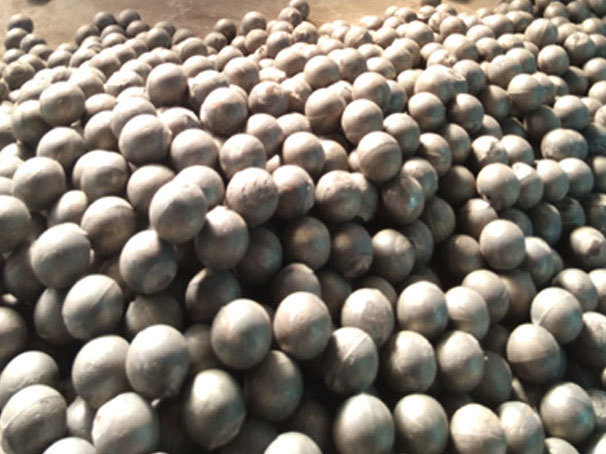
Ball mill steel balls are the spherical grinding media loaded inside a rotating cylindrical mill to crush and grind ore, cement clinker, or other hard materials through continuous impact and abrasion. They are the mechanical core of any comminution circuit, and their condition directly determines energy consumption, product fineness, and operating cost per tonne.
Wear rate — expressed in grams of media consumed per tonne of material ground (g/t) — is the single most actionable metric for grinding circuit optimization. A mill running with worn, undersized, or poorly selected ball mill steel balls will consume 15–40% more energy to achieve the same P80 product size. That is not a theoretical estimate; it is a figure consistently observed in real plant audits across iron ore and cement operations.
Why do so many engineers focus on purchase price while ignoring wear rate? It is a common but costly mistake. A cheaper ball that wears twice as fast costs more over a six-month campaign than a premium forged alternative — even when the unit price differential is 20%. Total cost of ownership, not invoice price, is the correct evaluation framework.
How wear rate is measured in practice
The standard approach involves weighing the total media charge before and after a defined production period, then dividing the mass loss by the total tonnage processed. Some operations use tracer balls — individually weighed spheres re-sampled at intervals — which provides more granular data. In cement mills, consumption is often tracked as kg of grinding media per tonne of cement produced, with industry benchmarks ranging from 30 to 120 g/t depending on feed hardness and media grade.
The cost impact at scale
Consider a mid-size Brazilian iron ore concentrator processing 5,000 tonnes per day. At a wear rate of 500 g/t and a media cost of USD 0.80/kg, daily grinding media expenditure reaches USD 2,000. Reduce that wear rate by just 20% through better ball selection, and the annual saving exceeds USD 140,000 — without touching any other operating variable. The numbers make clear why wear rate deserves its own optimization program.
Root causes of accelerated wear in grinding media balls
Accelerated wear in ball mill steel balls does not happen randomly. It follows specific failure mechanisms, each with a distinct signature and a distinct fix. Understanding the root cause prevents the common error of switching suppliers without addressing the process problem underneath.
Abrasive wear: the dominant mechanism
Abrasive wear accounts for the majority of grinding media mass loss in most hard-ore applications. It occurs when ore particles, harder than the ball surface, cut micro-grooves into the steel matrix with every contact cycle. The Vickers hardness of the ball surface relative to the ore is the controlling variable. Silica-bearing ores (SiO₂ hardness ~7 Mohs) will aggressively abrade a medium-chrome ball (HRC 48–52) but cause far less damage to a high-chrome forged ball (HRC 60–65).
Impact fracture and spalling
Here is where a common industry misconception must be corrected: hardness alone does not guarantee wear resistance. Balls that are too hard become brittle, fracturing under the high-energy impacts of a large-diameter mill. This produces spalling — surface layers break off in flakes — which dramatically accelerates size reduction of the ball itself. Real plant testing in Minas Gerais operations has confirmed that excessively hard balls (HRC above 66) in mills with large-diameter charge (≥80 mm) show 30% higher breakage rates compared to balls with HRC 60–63 and better toughness balance.
Just like a ceramic knife — supremely sharp but fragile under lateral stress — an over-hardened grinding ball sacrifices the toughness it needs to survive high-impact conditions.
Corrosive wear in wet grinding circuits
Wet grinding accelerates corrosion-assisted wear. In the presence of acidic mill slurry (pH below 6), electrochemical attack compounds the mechanical abrasion, creating a synergistic wear mechanism that can double effective wear rates compared to dry conditions. This is particularly relevant in Brazilian sulfide ore processing, where mill slurry pH often drops to 4.5–5.5. High-chrome steel grinding balls with Cr content above 18% demonstrate significantly superior corrosion resistance in these environments.
Process-side causes often ignored
Incorrect ball loading level, mismatched ball diameter-to-feed-size ratio, and excessive mill speed all amplify wear beyond what any material upgrade can fully compensate. A mill operating at 85% critical speed with oversized balls will consume grinding media at rates that make even premium balls look expensive. Process audit before media selection change is not optional — it is the prerequisite.
Wear rate data: forged vs. cast steel grinding balls compared
Data is where procurement decisions should be grounded. The table below presents 2026 benchmark wear rate ranges compiled from plant trials and supplier technical sheets across hard-rock mining and cement applications, reflecting conditions typical of Brazilian operations.
| Media type | Hardness (HRC) | Wear rate — iron ore (g/t) | Wear rate — cement (g/t) | Breakage rate (%) | Typical Cr content (%) |
|---|---|---|---|---|---|
| Forged steel balls (high-C) | 60–65 | 280–420 | 30–55 | <0.5% | 0.5–1.5 |
| High-chrome cast iron balls | 58–66 | 250–380 | 25–50 | 0.5–1.2% | 10–30 |
| Mid-chrome cast iron balls | 48–55 | 450–650 | 60–100 | 0.8–2.0% | 5–10 |
| Low-chrome / cast iron balls | 40–50 | 600–900 | 80–130 | 1.5–4.0% | 1–3 |
"In comparative trials conducted at Brazilian iron ore sites, upgrading from low-chrome cast iron grinding balls to high-carbon forged steel balls reduced media consumption by 35–45%, offsetting the higher unit price within 3–4 months of operation." — Industry technical review, 2026 grinding media benchmarking report.
Interpreting the data correctly
The wear rate ranges above reflect variability in ore hardness, mill dimensions, and operating conditions. A single number extracted from a competitor's brochure without context is nearly meaningless. What matters is the wear rate achieved under your specific conditions — feed size, slurry pH, mill diameter, and rotation speed. Pilot trials lasting a minimum of 30 days, with controlled ball loading and consistent feed, remain the only reliable qualification method.
Steel ball hardness and its limits
Steel ball hardness — measured in HRC or Vickers — is the most commonly cited specification, yet it is frequently misread. The data above shows that high-chrome cast iron balls at HRC 60–66 deliver wear rates comparable to forged steel balls at HRC 60–65, but with higher breakage rates in impact-intensive circuits. For cement mills, where impact energy is moderate, high-chrome cast iron grinding balls are often cost-competitive. For large AG/SAG-adjacent ball mills in mining, the superior toughness of forged steel grinding balls typically wins on total cost.
How ball mill liner condition affects steel ball consumption
Ball mill liner wear and steel ball wear are deeply interconnected — yet many operations manage them as separate budgets without recognizing the feedback loop between them. A worn ball mill liner changes the trajectory of balls during the cascading motion, converting productive grinding impacts into destructive metal-on-metal collision, which accelerates both liner and ball degradation simultaneously.
The liner-ball interaction mechanism
New liners with correct lifter geometry ensure balls are carried to the optimal drop height and released at an angle that maximizes ore impact energy. As lifter height decreases from wear, balls begin to slip rather than cascade — reducing grinding efficiency and increasing the fraction of direct ball-to-liner impacts. According to real case data from Pará state operations, a mill operating with liners worn to 40% of original lifter height showed a 22% increase in steel ball consumption rate compared to post-liner-replacement baseline.
Synchronizing liner and media replacement cycles
The practical recommendation is to schedule a ball size audit every time liners are replaced. The charge size distribution shifts progressively as balls wear — smaller balls accumulate at the bottom of the size distribution, reducing average impact energy. Recharging with correctly sized balls immediately after liner replacement resets both variables simultaneously, maximizing the benefit of the liner capital expenditure.
Selecting the right grinding ball size and hardness grade
Grinding ball size selection is where many Brazilian plants leave significant efficiency on the table. The common assumption — that larger balls are always better for hard ore — is only partially correct, and applying it indiscriminately creates its own wear problems.
The Bond ball size formula and its practical use
The widely referenced Bond formula for ball size selection relates optimal ball diameter to feed size (F80), ore work index (Wi), and mill diameter. For a typical Brazilian iron ore with Wi of 12–16 kWh/t and F80 of 12–15 mm feeding a 5.5 m diameter ball mill, the formula recommends a top ball size in the range of 65–80 mm. Using 100 mm balls in the same circuit increases impact energy beyond what the ore requires, accelerating steel ball wear without improving product fineness. Of course, there are exceptions — extremely hard, coarse feeds may justify a larger top size — but these must be validated by trial, not assumed.
Hardness grade selection by application
For procurement engineers comparing grinding balls manufacturer specifications, the following framework applies as a starting point:
- Hard abrasive ores (SiO₂ > 40%, Wi > 14 kWh/t): High-carbon forged steel balls, HRC 60–65, diameter 60–80 mm.
- Moderately abrasive ores (Wi 10–14 kWh/t): High-chrome cast iron grinding balls, HRC 58–64, diameter 50–70 mm.
- Cement clinker grinding: High-chrome steel balls, HRC 60–66, diameter 17–50 mm depending on chamber.
- Wet grinding with acidic slurry (pH < 6): High-chrome (Cr ≥ 18%) as minimum specification; forged balls require surface treatment or alloy upgrade.
For a deeper technical reference on how ball mill grinding media interacts with the mill's mechanical design and ore properties, the foundational principles are well documented and remain the basis for modern selection models.
Practical solutions to reduce wear rate and total cost
Reducing ball mill steel balls wear rate is not a single-action fix. It requires coordinated changes across media specification, process parameters, and monitoring systems. The following structured approach reflects what consistently delivers results in real operations.
Step-by-step wear reduction program
- Baseline audit: Measure current wear rate (g/t) using the mass-balance method over a minimum 30-day period. Record slurry pH, mill speed (% critical), feed F80, and ball top size.
- Failure mode diagnosis: Examine worn balls from the mill discharge. Smooth spherical wear indicates abrasive mechanism. Flat facets or cracks indicate impact fracture or spalling. Pitting and roughness indicate corrosive wear. Each mode requires a different solution.
- Media specification change: Select the upgraded grade (see section 5) and order a minimum trial batch of 20–30 tonnes to run in parallel with reference campaign.
- Process parameter check: Confirm mill speed is within 72–78% critical speed range. Verify ball loading level (typically 30–38% mill volume). Adjust feed rate to maintain consistent slurry density.
- Liner inspection: If lifter height is below 50% of original, schedule liner replacement concurrently with the media trial to isolate variables.
- Performance evaluation: After 30–45 days with the new media grade, recalculate wear rate and compare power draw (kWh/t) and product P80. Total cost per tonne ground — not wear rate alone — is the final verdict.
Monitoring and continuous improvement
Plants that sustain low wear rates share one practice: they track media consumption weekly, not monthly. A sudden uptick in consumption rate is an early signal of liner wear acceleration, feed hardness change, or pH shift — all of which are addressable if caught early. Implementing a simple consumption log tied to the production data system costs nothing and can prevent runaway media expenditure between scheduled audits.
Brazil-specific context: mining operations and grinding media procurement
Brazil is the world's second-largest iron ore producer (USGS, 2026), with the mining sector contributing approximately 3–3.2% of national GDP according to IBRAM data. The scale of comminution activity in states like Pará, Minas Gerais, and Goiás makes grinding media procurement a strategic category — not a routine consumable purchase.
Local supply chain and lead time considerations
A critical pain point for Brazilian operations is delivery lead time from international grinding balls manufacturers, which can reach 60–90 days for sea freight from Asian suppliers. This makes safety stock sizing a financial decision as much as a logistics one. In 2026, the trend among larger Brazilian mining companies is to qualify at least two approved suppliers — one domestic or regional, one international — to balance cost and supply security.
Cement mill grinding balls procurement in Brazil follows slightly different dynamics, with domestic producers covering a larger share of demand. However, for high-performance high-chrome specifications, imported product still commands a significant portion of the market due to the limited local capacity for premium grades.
Sustainability and traceability requirements in 2026
Brazilian mining regulations and international investor ESG requirements are pushing operations to document the origin and composition of all consumables, including mining grinding media. Grinding balls manufacturers supplying the Brazilian market in 2026 are increasingly expected to provide mill certificates, alloy composition traceability, and carbon footprint declarations alongside standard hardness test reports. This is no longer a differentiator — it is becoming table stakes for approved vendor lists at major operations.
Conclusion
Wear rate in ball mill steel balls is not a fixed cost — it is a controllable variable with measurable financial consequences. From selecting the correct hardness grade and ball size to synchronizing liner replacement cycles and monitoring slurry pH, every factor discussed in this article offers a real lever for cost reduction. In the context of Brazil's large and growing mining and cement sectors, even a modest improvement in grinding efficiency — backed by the right ball mill steel balls specification — translates into millions of reais in annual savings at scale. The data exists, the methodology is proven, and the first step is a 30-day baseline measurement.
Frequently asked questions
Q: What is a typical wear rate for ball mill steel balls in iron ore applications?
A: In Brazilian iron ore operations, typical wear rates range from 280 to 650 g/t depending on ore hardness and media grade. High-carbon forged steel balls at HRC 60–65 generally achieve 280–420 g/t, while low-chrome cast iron grinding balls may exceed 600 g/t under the same conditions.
Q: Are forged steel balls always better than cast iron grinding balls?
A: Not always. Forged steel balls offer superior toughness and are preferred in high-impact mill circuits. High-chrome cast iron grinding balls can match or outperform them in abrasion-dominant, moderate-impact applications like cement mills. The correct choice depends on your specific wear mechanism, not a universal ranking.
Q: Does higher hardness always mean lower wear rate?
A: No. This is a common misconception. Hardness above HRC 66 in large-diameter balls increases brittleness and breakage, which can raise effective consumption rates. The optimal hardness balances abrasion resistance and impact toughness — typically HRC 60–65 for most hard-ore applications.
Q: How does ball mill liner wear affect grinding media consumption?
A: Worn liners alter ball trajectory, increasing direct ball-to-liner impacts and reducing grinding efficiency. Plant data shows that liners worn to 40% of original lifter height can increase steel ball consumption by over 20%. Coordinating liner and media replacement cycles is a proven cost-reduction practice.
Q: What lead times should Brazilian procurement teams plan for when sourcing grinding balls?
A: International suppliers typically require 60–90 days for sea freight delivery to Brazilian ports. Domestic and regional suppliers can reduce this to 15–30 days. In 2026, most large operations maintain 45–60 days of safety stock and qualify dual supply sources to manage both cost and supply continuity effectively.
Latest News

What is casting steel ball? Materials, process and applications explained
How to find reliable casting parts buyers for your foundry business
Common defects in casted parts and how to avoid them
MESSAGES
We will contact you within one working day. Please pay attention to your email.
Quick Link
Contact Us
WhatsApp: +8613933429302
Telephone: +86-315-5557888
E-mail: bjnm3@baojienm.com
Address: Baiguantun Town,Fengrun District,Tangshan City,Hebei,China.


